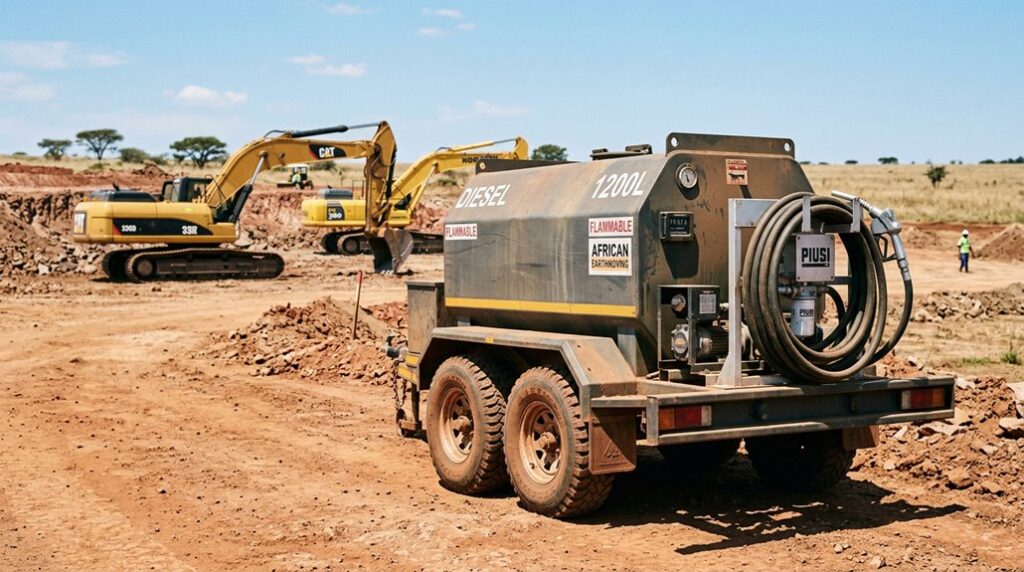
Sceptical that on-site fuel logistics can truly transform your bottom line? A dedicated 1,000-litre diesel bowser challenges that doubt outright, delivering measurable gains in daily equipment productivity. With 12-volt battery pumps and digital flow metres, it slashes idle transport times and keeps machines running when every minute counts. The real question isn’t whether it works, but how much output you’re losing without one. Find out what this compact powerhouse can do for your fleet.
On-Site Fueling Benefits of Diesel Bowsers
When you bring diesel bowsers directly to your job site, you eliminate non-productive travel time and keep machinery operating where it belongs.
You join a united community of productive operators who value shared success and efficiency. Together, crews gain essential on-site fuelling benefits that strengthen daily workflows and crew collaboration.
A team achieves a great result by managing fuel as a unified group:
- Save significantly through bulk purchasing.
- Recover 20+ operator hours each week across a mid-sized fleet.
- Eliminate 5 hours of lost productivity daily for every 10 machines.
Fewer vehicle movements deliver improved site safety for all team members. Controlled dispensing reduces spill hazards and unsafe manual handling across the grounds. Operators also enjoy full peace of mind because these units ensure ADG compliance during transit.
“We are delighted with our team’s safety,” reports one site manager.
Core Features of Modern Diesel Bowsers
Modern diesel bowsers combine durable storage engineering with high-precision transfer systems to secure your field operations. You’ll join a responsible network of transport professionals when you implement these systems.
Rugged steel or aluminium tanks prevent leaks and resist heavy corrosion. Integrated 12V or 24V electric pumps deliver consistent flow rates directly to your heavy machinery. These units are widely used to support on-site refuelling for critical equipment across industries like construction, mining, and farming.
Every dependable unit includes essential hardware:
- Digital flow metres that record dispensing data accurately.
- Flexible fuel hoses with automatic shut-off nozzles.
- Advanced inline filtration that removes dangerous fuel contaminants.
You safeguard the whole crew by pairing refills with daily equipment reviews. Add a quick truck tyre inspection and a thorough tyre safety checklist to every fuelling stop.
We’re delighted to see teams work together and build safer, fully compliant transport operations.
Sizing Options and Towable Chassis Specs
Selecting the right tank capacity and trailer frame keeps your refuelling operations safe on public roads and remote job sites. When you join our safety-focused transport community, you protect your crew by matching fuel volumes to sturdy undercarriages. Operators can further reduce downtime and risks by pairing bowsers with trusted 24/7 truck support for tyres, towing, and mechanical repairs.
| Capacity | Chassis Setup | Loaded Weight |
|---|---|---|
| 1,000 Litres | Single Axle | 1,710 kg |
| 2,000 Litres | Twin Axle | 3,025 kg |
Heavy 2,000-litre trailers use double-axle frames, 50 mm ball couplers, and 205 R16 tyres. You maintain road safety when your team logs pressures on a standard truck tyre inspection sheet. Our community prevents motorway blowouts by adding trailer wheels to every routine truck tyre inspection checklist before despatching drivers. Tough hot-dip galvanised steel delivers reliable performance, keeping everyone moving forward together seamlessly. Built for environmental protection and compliance, these units feature a bunded design to ensure reliable secondary containment.
Diesel Bowser Handling and Bunding Regulations
Compliance rules strictly control the transport of UN 1202 diesel on public highways.
As valued transport partners, we protect our community by maintaining strict fleet safety standards together. You must confirm that your double-skinned bowser provides 110% containment for the inner tank volume.
Drivers also complete a tyre inspection checklist and a truck tyre check sheet before moving any rig. To maintain full legal compliance, intermediate bulk containers must undergo in-service inspections every 2.5 years.
Drivers thoroughly complete both tyre inspection checklists and truck tyre check sheets before moving any transport rig.
We’re delighted to share these essential rules to keep your team fully compliant on the road:
- Double-walled bunding holds at least 110% of tank capacity.
- Loads exceeding 1000 litres require orange hazardous-material plates.
- Lockable containment valves stay secured during road travel.
- Mechanical lifting points guarantee safe positioning on site.
- Routine internal testing occurs every five years without fail.