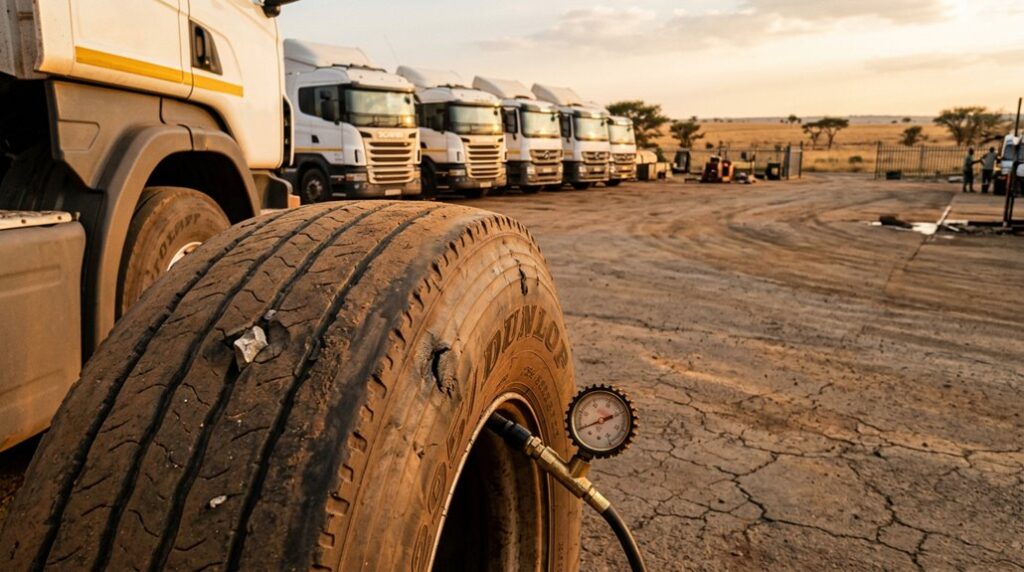
A DOT inspector crouches beside your steer tyre and presses a gauge into the most worn groove. Within seconds, that one reading decides whether your lorry keeps earning or sits out of service with a violation on your record. Most drivers assume they know the limits, yet plenty get caught by a number they got wrong. Federal rules set different minimums for steer tyres than for drive and trailer tyres, and the gap between them trips up even seasoned fleets. Guesswork won’t protect you at the roadside. What will is knowing the exact figures, the exact spots to measure, and a quick routine you can run before every trip. So what does an inspector check first, and which tyre fails most often?
Steer Tyres Need 4/32 Inch of DOT Tread Depth
Your steer tyres carry the strictest tread rule on the truck. Federal rule 49 CFR 393.75(b) sets the steer minimum at 4/32 inch. That’s double the 2/32 inch allowed on drive and trailer tyres. The higher steer requirement exists because front tyres need extra grip for better steering and wet-weather control. Local fleets in Piet Retief rely on expert truck tyre fitment and regular inspections to ensure those legal tread depths are consistently maintained.
Inspectors don’t use an average. They measure your truck tyre tread depth in a major groove, and the shallowest reading decides compliance. One low spot means a failed tyre.
- Minimum: 4/32 inch at any point in a major groove
- Excluded areas: tie bars, humps, fillets, decoupling grooves
- Tool: a tread-depth gauge, not your eye
Tyre replacement signs include any groove nearing 4/32 inch.
“Replace early, before the deepest wear point reaches the limit.” Responsible fleets like yours check every groove before dispatch and document each reading. That keeps you compliant.
Drive and Trailer Tyres Can Go Down to 2/32 Inch
Drive and trailer tyres follow a lower legal limit than steer tyres. Federal rule 49 CFR 393.75(c) sets 2/32 inch as the legal tyre limit for these positions. You measure it in a major tread groove. If a tyre has no tread depth indicators, take this reading with a tread depth gauge. Tie bars, humps, and fillets don’t count. Fleets that combine proper tread depth checks with 24/7 truck services for tyres, towing, and repairs can further reduce downtime and stay compliant on the road.
| Measurement | Status |
|---|---|
| Above 2/32 inch | Compliant |
| At 2/32 inch | Legal minimum |
| At or below 1/32 inch | CVSA out of service |
The same rule covers both axle groups. Drive tyres need grip under torque. Trailer tyres carry cargo and support braking.
“Legal minimum” isn’t a replacement target. Wear becomes risky before 2/32 inch. That’s why careful fleets set their own replace-at points.
Regular tyre safety checks put your fleet among operators who pass inspections with confidence. That’s a great result for everyone.
Where to Measure Tread Depth for DOT Compliance
Because inspectors judge compliance by groove depth, you’ll need to take every reading in a major tread groove.
Don’t measure on tread blocks, tie bars, or wear indicators. These raised features give false readings under DOT tyre regulations.
Follow these steps during every truck tyre inspection:
- Find the area of greatest wear. The shallowest valid groove decides pass or fail.
- Take readings at three points, spaced about 120° apart around the tyre.
- Check two adjacent major grooves at each point. One groove isn’t enough.
Use a proper tread depth gauge. Push the probe straight into the groove until it hits bottom, then read the result in 32nds of an inch.
Skip the coin test for records. Join N2 fleet owners who trust this method.
How to Avoid Out-of-Service Tread Depth Violations
Accurate groove readings only protect you if you know which numbers trigger enforcement. FMCSA sets two citation limits. CVSA sets stricter out-of-service triggers.
- Steer tyres: 4/32 inch citation limit; out of service below 2/32 inch in two adjacent major grooves.
- Other positions: 2/32 inch citation limit; out of service below 1/32 inch in two adjacent grooves at three locations.
Check steer, drive, and trailer tyres before every dispatch. Steer tyres wear fastest, so you’ll check them most often.
Watch tyre wear patterns, because one low spot can fail an inspection.
Fleet owners who pass consistently share one habit. They log every reading and schedule commercial tyre replacement before tread nears the limit.
That buffer’s a great result for your drivers and your business.