Your tyres are losing pressure right now, and nothing on the surface will tell you. Up to 2 psi can leak away every month, quietly wearing down tread, pushing up fuel costs, and raising the odds of a blowout at speed. Then there’s the legal side: a single illegal tyre can cost your driver up to £2,500 and three penalty points, and that’s per tyre. Most fleet managers trust the quick walk-around check, but it misses far more than it catches. So what does a proper tyre safety inspection actually involve, and which gaps are leaving so many fleets exposed?
What Does a Full Tyre Safety Inspection Cover?
A full tyre safety inspection covers five core areas: pressure, tread, sidewalls, wheel hardware, and alignment. Each area protects your lorries, your drivers, and your load. Fleets around Piet Retief and Mkhondo also rely on professional truck tyre fitment and repairs to keep these safety checks effective over the long term.
Pressure, tread, sidewalls, wheel hardware, and alignment: five core checks that protect your lorries, your drivers, and every load you carry.
When you follow a complete truck tyre checklist, you join fleet operators who don’t leave safety to chance.
Here’s what you’ll check:
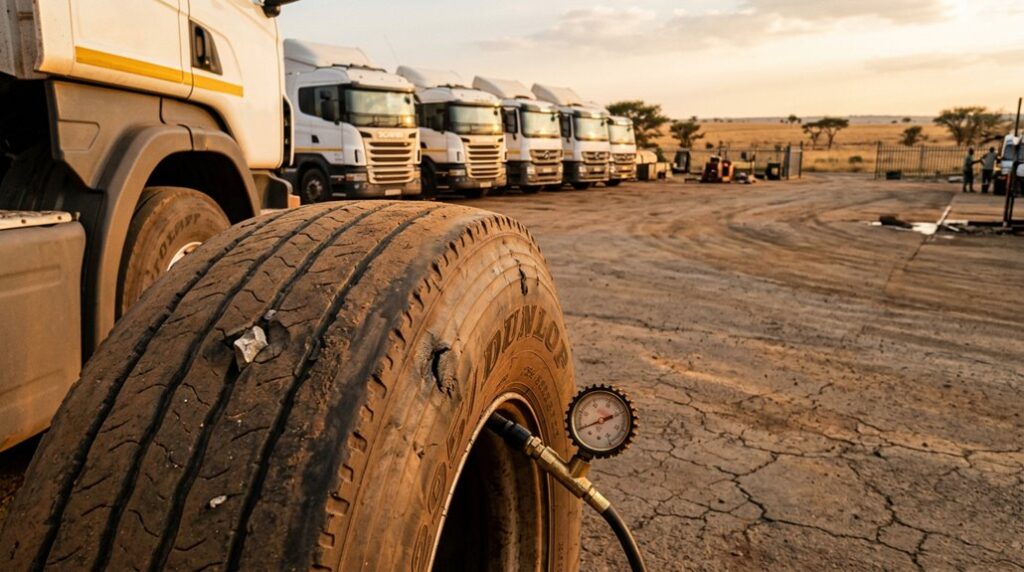
- Pressure: Measure cold pressure at every position, including dual assemblies.
- Tread: Measure depth at multiple points and spot feathering, cupping, or one-side wear.
- Sidewalls: Look for cuts, bulges, cracks, and exposed cords.
- Wheel hardware: Inspect valves, rims, and wheel nuts for damage and correct torque.
- Alignment: Review wear patterns, vibration, rotation intervals, and tyre age.
You’ll log every result, defect, and correction.
These records reveal wear trends early. They’re also your team’s shared proof of compliance. Fleets that track these records in a CMMS can achieve a 22% tyre cost reduction.
What Tread Depth Is Legal for Cars and HGVs?
How much tread does the law require? It depends on your vehicle’s weight class. You’ll join responsible fleet operators by applying the correct limit. Our 24/7 team in Piet Retief Mkhondo can help keep tyres compliant as part of broader truck services that minimise downtime.
- Cars, light vans, and trailers up to 3,500kg: 1.6mm across the central three-quarters of the tread.
- HGVs, buses, and trailers over 3,500kg: 1mm across at least three-quarters of the tread breadth.
- HGVs: the original pattern must stay visible on the remaining quarter.
Both limits apply around the full circumference. Your gauge measures groove depth, not tie bars or tread wear indicators. One tyre section below the limit creates a legal defect. Even when a car tyre is above the legal limit, safety risks and stopping distances increase once tread falls below 3mm.
A thorough tyre condition survey separates light vehicles from HGVs. Every truck tyre inspection should confirm the right threshold.
Our team’s rule is simple: “Measure every tyre, every time.”
How Do You Run a Fleet Tyre Safety Check?
Before you check a single tyre, put the right people, tools, and conditions in place. Your team works best when everyone knows who checks, reports, and corrects each issue. For fleets operating in demanding conditions, partnering with specialists in 24/7 breakdown support and comprehensive truck tyre services can strengthen every stage of your inspection process.
Park and isolate the vehicle, then fit a steering wheel cover to signal maintenance. Check cold tyres, because warm tyres show higher pressure after driving.
Your inspector’s kit should include:
- PPE and a torch
- A calibrated pressure gauge
- A digital tread gauge
- Tyre-handling tools
Strong fleet tyre management means you record PSI or bar against manufacturer specs for every tyre, including dual assemblies and trailers.
Measure tread at the centre and both shoulders. Log each reading on the spot.
Commercial tyres’ safety depends on it, and you’ll join fleets that don’t leave failures to chance.
What Does a Failed Tyre Inspection Cost Your Fleet?
Three problems hit your fleet when a tyre fails inspection: fines, downtime, and early replacement. Here’s what the data shows:
- Tread-depth violations: fines issued for each affected tyre
- Exposed belt or ply: fines that are typically even steeper
- Downtime from one out-of-service order: losses that mount with every hour a truck sits idle
- Alignment-related early replacement: a preventable expense on each affected tyre
You also lose tread life. A tyre running 20% under-inflated loses 25% of its tread life. Missed rotations consume 20% to 25% of remaining service life.
Fleets that inspect regularly share a common result. They’re spending less and moving more. In Mkhondo and Piet Retief, detailed mechanical truck repairs and maintenance checks help catch tyre and alignment issues early, before they turn into costly failures.
Tyre blowout prevention starts with pressure checks and alignment. When you need truck tyre repair, fast roadside service keeps your trucks rolling on the N2. That’s a great result for your whole team.