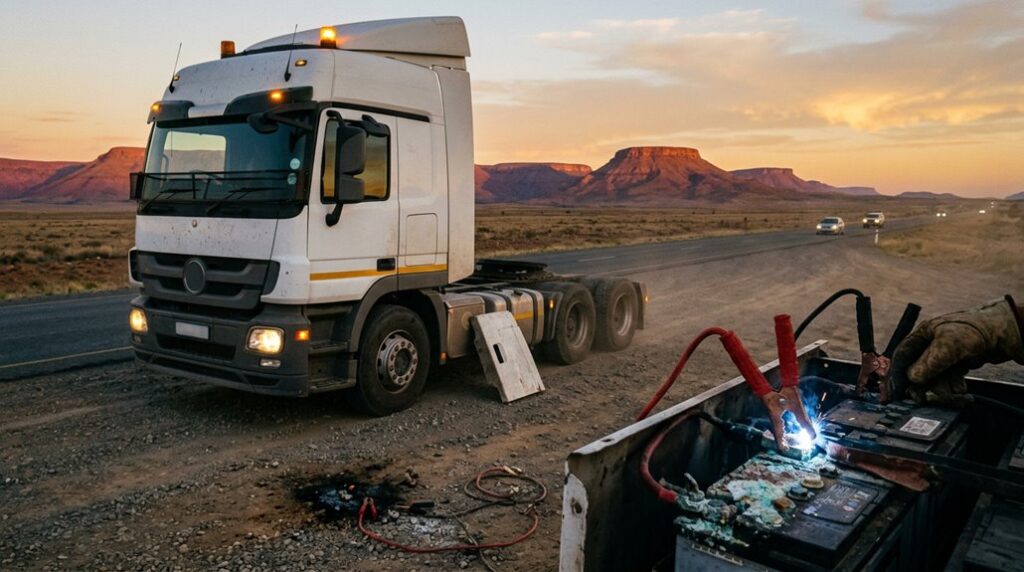
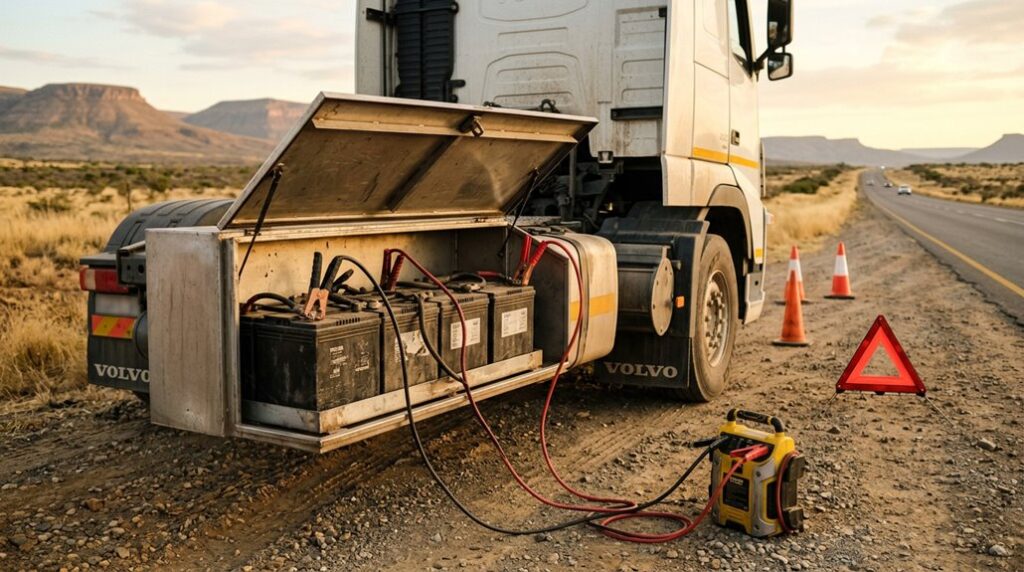
You turn the key, clamp on the cables, and nothing happens. Most drivers blame a dead battery and move on, but that’s rarely the whole story. Your lorry runs on a 12-volt system, usually fed by three or four batteries wired in parallel, and once they sag below 10 volts, a jump almost never works. Yet perfectly healthy batteries can leave you stranded too. Corroded connections, thin cables, and a tired alternator can quietly sabotage the entire process, and most people never think to check them. So if the batteries aren’t the culprit, what’s really keeping your lorry parked on the hard shoulder?
Is Your Jump Setup Wrong for a Lorry?
Why won’t your rig crank after you’ve connected the cables? Your setup may not match a lorry’s demands. Many fellow drivers on the N2 face this exact issue. Professional battery health checks done on schedule can also catch weak or failing units before a jump start is even needed.
Cables connected but your rig still won’t crank? Your jump setup probably doesn’t match what a lorry actually demands.
When your jump start has failed, check these points first:
- Use heavy-duty jump leads. Light-duty leads can’t handle large diesel loads.
- Match the jump source to the lorry’s 12V system.
- Confirm your auxiliary battery or jump pack supplies enough current for high cranking demand.
- Use eyelet-style connectors or specialised lorry cables for hard-to-reach batteries.
- Connect to the battery closest to the starter when your lorry’s layout requires it.
Correct gear prevents many common lorry starting problems. Pairing that gear with preventive maintenance reduces the unexpected failures that leave you stranded in the first place. Experienced drivers follow one rule: “Match the equipment to the engine.”
You’ll join them once your setup fits your rig.
Are Your HGV Batteries Too Flat to Jump-Start?
How low can your battery voltage drop before a jump won’t help? A rested battery at 10.5 volts is fully discharged. Below 10 volts, a lorry jump-start will likely fail. Many drivers face this.
Watch for these warning signs:
- No dashboard lights, clicks, or electrical response
- Voltage that won’t rise above 10.5 volts during charging
- Repeated jumps with no change
- A lorry that starts briefly, then dies
Severe lorry battery drain causes sulfation. This damages internal plates and reduces charging acceptance. Even a single deep discharge below 10.5 volts can cut battery capacity by 20% to 50%. A battery left dead for weeks often won’t hold a jump.
In 24V series systems, one failed battery drags down the whole circuit.
“A dead reading often means damaged cells, not just low charge.” Then you’ll need a full recharge or replacement.
Is the Alternator or Starter the Real Culprit?
Healthy batteries don’t guarantee a successful jump. Your truck needs a working alternator and starter too. Each part fails in a different way. Knowing the pattern helps you and fellow drivers get back on the road faster.
A good battery is only one part of the story. Your alternator and starter decide whether a jump gets you moving.
Watch for these signs:
- Starts with a jump, then dies: your alternator likely isn’t charging.
- Only a click, no crank: your starter, solenoid, cable, or earth is likely at fault.
- Slow crank with dim lights: check battery weakness or cable resistance.
- Repeated jumps with no recovery: charging failure is more likely.
A healthy alternator produces 13.8 to 14.5 volts with the engine running. Voltage drop during cranking should stay below 0.5 volts. For lasting reliability after a failed jump start, technicians rely on rapid diagnostics and trusted components to find and fix the root electrical problem fast. Our technicians follow one rule: “Test each battery first.” That’s how N2 drivers avoid towing.
What if the Articulated Lorry Still Won’t Start?
When a jump-start and a working starter still don’t bring your truck to life, the fault often lies outside the charging system. You’re not alone here. Many drivers on the N2 face this exact problem.
Stop cranking after 30 seconds. Extended cranking overheats the starter and drains your heavy truck battery.
Then work through these checks:
- Battery voltage, terminal tightness, and corrosion
- Fuel filter condition and fuel supply
- Glow plug or grid heater operation in cold weather
- Diagnostic codes, crank/cam signal, and relay status
A zero tachometer reading while cranking often points to crank sensor trouble. Africa Tyres Bendet sees this often.
“Most roadside non-starts trace back to fuel, earths, or sensors,” our technicians say. Professional auto electrical repairs get you moving without the hassle of towing. For stubborn non-starts near Piet Retief/Mkhondo, 24/7 mobile auto electrical support and secure overnight parking can keep you safe while your truck is professionally diagnosed and repaired.