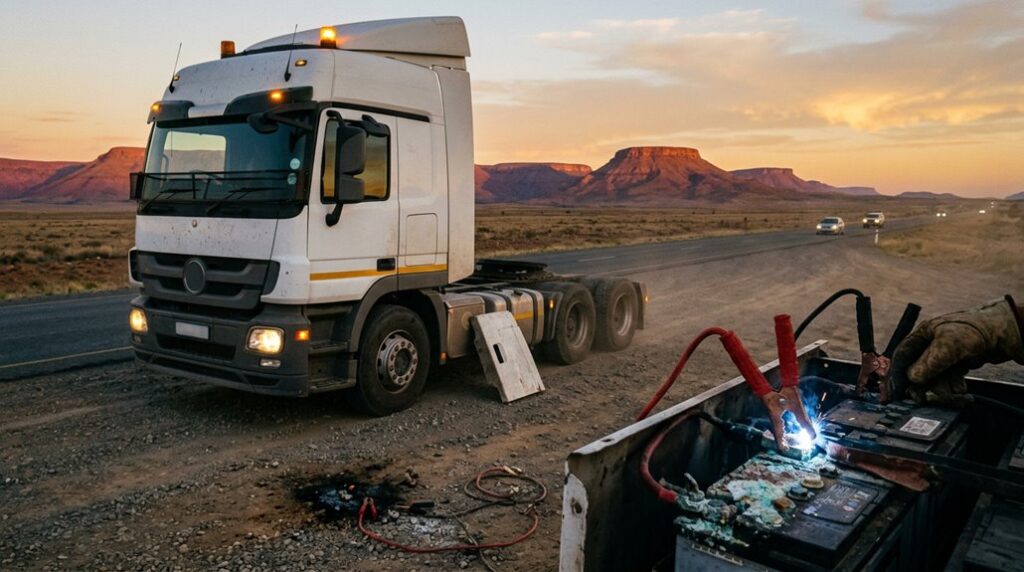
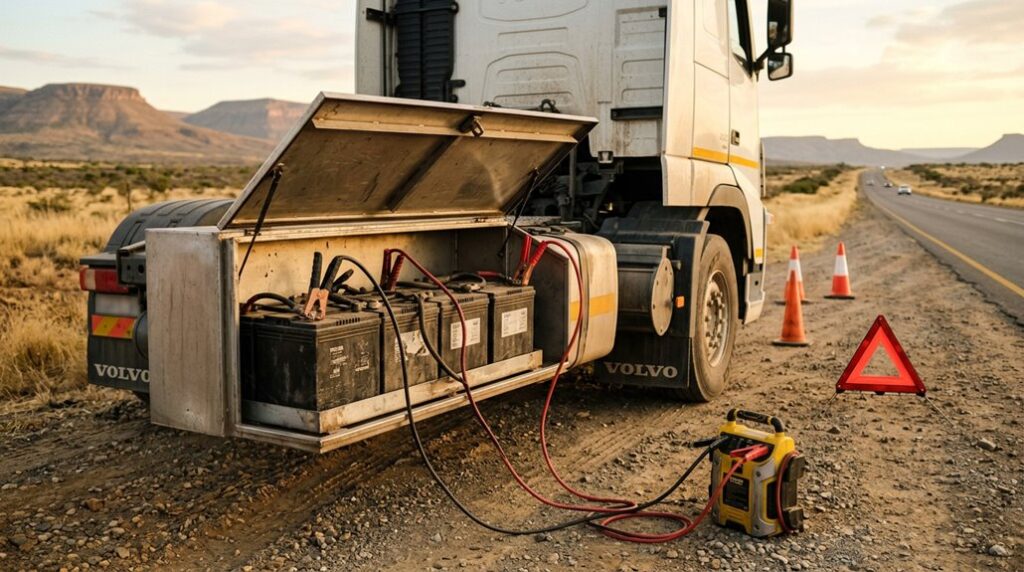
A dead four-battery bank on a lorry is not a bigger version of a dead car battery, and treating it like one is how people fry ECUs, warp terminals, or split a battery case. These banks hold serious current, whether they’re wired in parallel for 12V or in series for 24V, and one wrong clamp or one mismatched donor can turn a simple jump into an expensive, sparking mess. Most drivers grab the cables and start connecting. The ones who avoid the damage stop first and confirm one thing that decides whether the jump succeeds or backfires. Here’s how to do it safely, step by step, and what that first check is.
Match a 24V Donor to Your Lorry’s True Terminals
Before you connect a single cable, confirm that your donor matches your truck’s 24V system. A 12V donor isn’t a direct substitute. The wrong voltage can damage electronics and create a battery hazard. Check your power source’s voltage label first.
Experienced drivers follow the same rule: “Match the voltage, then match the terminals.”
Match the voltage, then match the terminals. That simple rule keeps experienced drivers safe on every heavy-duty jump start.
To jump start lorry systems with four batteries, you’ll need:
- A 24V heavy-duty power source or jump pack
- Heavy-duty jump leads with firm, fully seated clamps
- The manufacturer’s jump point layout
Find your lorry’s true terminals. Many rigs have a dedicated positive jump post and an earth point. Use them instead of a random battery post. Avoid clamping onto the middle link between series-wired batteries, since the wrong connection can supply only 12V.
That’s how you avoid wrong cable placement across a multi-battery system. It’s a great result.
Check Batteries and 2/0 Cables Before the Jump
Put on protective gloves and inspect every battery in your 24V system, including all four cases on a multi-battery rig. Look for cracks, bulging, leaks, or frozen cells. Treat any damage as a stop condition, because damaged batteries can rupture or explode during charging. In 1994, the NHTSA estimated that exploding batteries caused 442 injuries during jump-starts.
Don’t jump a frozen battery. Let it thaw somewhere warm.
Seasoned N2 drivers check batteries and terminals like this:
- Clean corrosion from serviceable terminals.
- Tighten loose hardware to prevent arcing.
- Skip the jump if terminal damage blocks a stable connection.
Inspect your 2/0 cables. Pull any cable with fraying, cuts, exposed wire, or melted insulation. Confirm the clamps are intact and grip firmly.
Route cables away from belts, fans, and hot exhaust parts. A clean inspection is a great result.
Jump a 4-Battery Lorry: Positive First, Earth Last
Once your inspection checks out, you’ll make four cable connections in a fixed order. Every professional crew follows this sequence to jump-start a truck safely. Keep the clamps apart until you’re ready.
- Red clamp to the dead truck’s positive terminal or jump stud.
- Other red clamp to the donor battery’s positive terminal.
- Black clamp to the donor battery’s negative terminal.
- Final black clamp to clean, unpainted chassis or engine-block metal.
Batteries vent hydrogen gas. The last connection sparks most, so you place it far from the battery bank. On a 4-battery lorry, the rule doesn’t change, even with series or series-parallel wiring. For added backup on the road, many South African lorry drivers rely on 24/7 breakdown support from specialist facilities like Africa Tyres Piet Retief Mkhondo.
Route cables away from adjacent posts. Tighten each clamp before moving on. The result: a lorry jump-start with no arcing.
Start the lorry, disengage in reverse, or stop cranking
With all four clamps seated, you’re ready for the start attempt. Confirm the donor voltage matches your lorry’s system. Keep bystanders clear of the cab, batteries, and cable path. Crank only long enough to see if the engine catches.
If it doesn’t fire promptly, stop. Pause so the starter and lorry battery can recover. Long cranking adds heat and drains weak batteries. For stubborn electrical issues that persist after a proper jump-start attempt, consider professional help from technicians who specialise in rapid diagnostics and comprehensive lorry electrical repairs.
Once it’s running, follow the steps experienced drivers trust:
- Let the engine settle briefly.
- Don’t rev while cables are attached.
- Remove the chassis earth clamp first.
- Remove the donor negative, donor positive, then the started lorry’s positive.
Knowing how to jump-start lorry rigs means knowing when to quit. Stop if cables smoke, spark heavily, or overheat. After several failed attempts, troubleshoot instead.