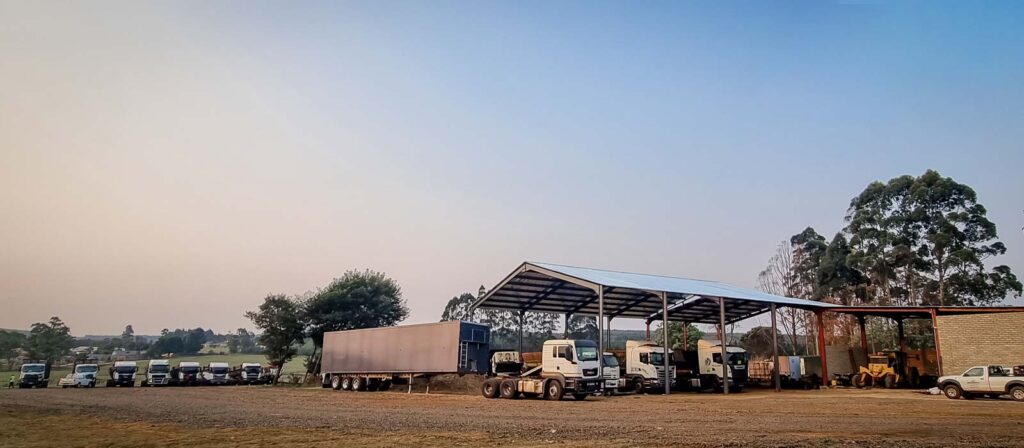
Picture this: it is 02:00, your loaded truck is parked on the shoulder of the N2 with its hazards blinking, the client wants to know where their delivery is, and your driver is on the phone asking what to do. The repair itself might be small – a cracked air line, a dead alternator, a tyre that finally gave up. The real bill is everything around it: the tow, the late penalty, the missed backload, the driver’s hours, the stress.
That is why the most expensive kilometre in trucking is the one your truck does not drive. Good fleet maintenance is not about spending more on your trucks. It is about spending on purpose – planned, predictable work in the yard instead of panicked repairs at the side of the road. This guide walks you through everything: maintenance schedules, daily checks, each major system on the truck, roadworthy requirements, budgeting, and what to do when something goes wrong anyway.
⚡ The quick answer
Effective fleet vehicle maintenance in South Africa rests on five habits: daily driver walkarounds, a preventive service schedule based on the manufacturer’s intervals and your real operating conditions, fast action on warning signs, good records for every truck, and a breakdown plan your drivers know by heart. Do these consistently and you will cut breakdowns, pass roadworthy tests first time and keep maintenance costs predictable.
📋 In this guide
- Preventive vs reactive maintenance
- The real cost of a breakdown
- A truck maintenance schedule you can actually follow
- The daily driver walkaround
- System by system: what to look after
- Warning signs you should never ignore
- Roadworthy tests and the law
- Affordable fleet maintenance: budgeting that works
- In-house, outsourced or both?
- Your breakdown plan
- The human factor: drivers and rest
- Frequently asked questions
Preventive vs reactive maintenance: which one is costing you?
Every fleet does maintenance. The question is whether you choose when it happens.
- Reactive maintenance means fixing things when they break. It feels cheaper because you only pay when something goes wrong – but you pay at the worst possible time, often at emergency rates, with a truck and load standing still.
- Preventive maintenance means servicing and inspecting at planned intervals, so worn parts are replaced before they fail. This is the backbone of any serious fleet.
- Predictive maintenance goes one step further, using data – telematics, oil analysis, tyre records, fault codes – to spot problems early. You do not need a big budget to start; even a spreadsheet of repairs per truck reveals patterns.
Most successful operators run a preventive system with a dash of predictive thinking. As Trucks Mag explains, a good fleet management system makes this far easier by keeping service dates, kilometres and defects in one place. Our article on why breakdown services matter for fleets shows what happens when the reactive approach catches up with you.
The real cost of a breakdown (it is not the repair)
When a truck stops unexpectedly, the parts and labour are often the smallest part of the bill. Think about everything else that lands on your desk:
- Towing or roadside call-out costs.
- Late-delivery penalties and, worse, unhappy clients.
- Lost revenue from the trip and any backload.
- Driver time, accommodation and meals while waiting.
- Damage to cargo, especially perishables.
- Knock-on damage – a failed part that destroys a more expensive one.
- Safety and security risks for a driver stuck on a dark road.
Cartrack’s breakdown of the true costs of fleet vehicle breakdowns is a good eye-opener here. Once you add it all up, a planned R3,000 service suddenly looks like the bargain of the month.
🤓 Did you know?
Many “sudden” breakdowns are not sudden at all. A weak alternator dims the lights for weeks, a leaking air line hisses for days, and a dragging brake leaves a hot hub and a smell long before it fails. Teaching drivers to report small things is one of the cheapest maintenance upgrades you can make.
A truck maintenance schedule you can actually follow
Your manufacturer’s service manual is always the starting point – service intervals vary widely between makes, models, oils and duty cycles. But a manual does not know your routes. Dusty forestry roads, heavy loads, lots of idling and steep climbs all count as severe duty, and severe duty usually means shortening the intervals. Here is a practical framework that works for most South African trucks:
| When | What to do | Who |
|---|---|---|
| Every day | Walkaround: tyres, wheel nuts, lights, leaks, air pressure build-up, warning lights, mirrors, coupling. Drain air tanks if there is no automatic drain. | Driver |
| Every week | Tyre pressures with a gauge, fluid levels (oil, coolant, AdBlue, hydraulic, washer), battery terminals, wipers, fifth wheel grease, check for chafed hoses and wiring. | Driver or yard staff |
| Every month | Brake adjustment and lining check, suspension and air bag inspection, belts and hoses, tread depths and wear patterns, lubrication of chassis points, charging system check. | Workshop or trained staff |
| Every service interval (per manufacturer) | Engine oil and filters, fuel filters and water separator, air filter, coolant condition, full brake inspection, steering and driveline, alignment, diagnostic scan. | Workshop |
| Every year | Roadworthy test for heavy-load vehicles before licence renewal, full chassis and body inspection, air dryer cartridge, cooling system service. | Workshop and testing station |
Print it, stick it on the workshop wall, and tick it off. Fleets that write their schedule down follow it. Fleets that “know it in their heads” usually do not.
The daily driver walkaround: 10 minutes that save thousands
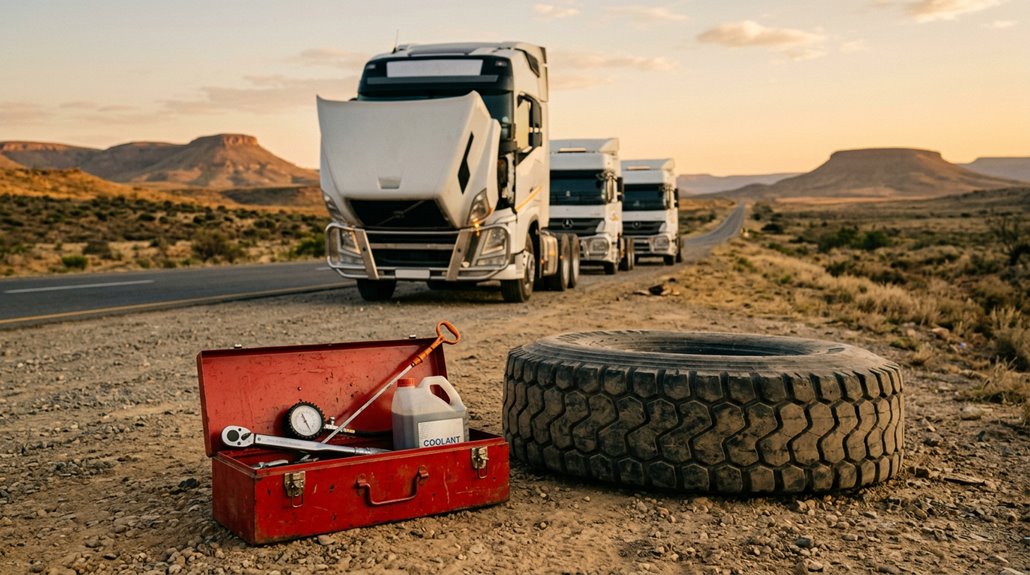
Your drivers are your best early-warning system. A proper walkaround before the first trip catches most problems while they are still cheap. Here is a simple order that covers everything without missing a corner:
- Front of the truck: lights, indicators, windscreen, wipers, mirrors, number plate, any fresh fluid under the engine.
- Steer axle: tyre condition, wheel nuts, hub oil level if visible, steering components.
- Driver’s side: fuel cap, steps and handrails, battery box, air tanks and lines, drive tyres including inner duals.
- Coupling: fifth wheel locked, kingpin secure, air and electrical connections clean and secure, no air leaks.
- Trailer: tyres, suspension, landing legs up, doors or load secured, reflectors and markings clean.
- Rear: lights, brake lights, reflectors, chevrons, number plate.
- Passenger side: repeat the side checks.
- In the cab: air pressure builds normally, no warning lights after start-up, brakes and horn work, fire extinguisher and triangles on board.
Tyres deserve extra attention on every walkaround – they are the most common cause of vehicle-related crashes in South Africa. Our truck tyre inspection checklist covers exactly what to look for, and the complete truck tyre guide explains pressures, wear patterns and legal tread depth.
💡 Pro tip
Make reporting easy. A WhatsApp group where drivers post a photo of any defect – with the truck registration and odometer reading – costs nothing and creates an instant, time-stamped maintenance record.
System by system: what to look after on a truck
Engine, fuel and cooling
The engine is the heart of the truck, and clean oil, clean fuel and clean air keep it healthy. Change oil and filters on schedule, drain the water separator regularly (diesel quality varies along South African routes), and never ignore a rising temperature gauge. On newer trucks with emissions systems, keep AdBlue topped up and do not ignore emissions warning lights – they can put the engine into reduced-power mode at the worst moment. For major work, our truck mechanical repair workshop handles engine, gearbox, clutch and driveline repairs.
Brakes and air system
Air brakes are incredibly reliable when looked after and incredibly dangerous when not. Key habits:
- Drain air tanks (or check the automatic drains) – water in the system rusts valves and freezes on cold Mpumalanga winter mornings.
- Replace the air dryer cartridge on schedule.
- Check brake adjustment and lining thickness regularly; brakes out of adjustment are a classic roadworthy failure.
- Listen for leaks with the engine off and the brakes applied.
- Watch for flat spots on tyres – they often point to brake problems.
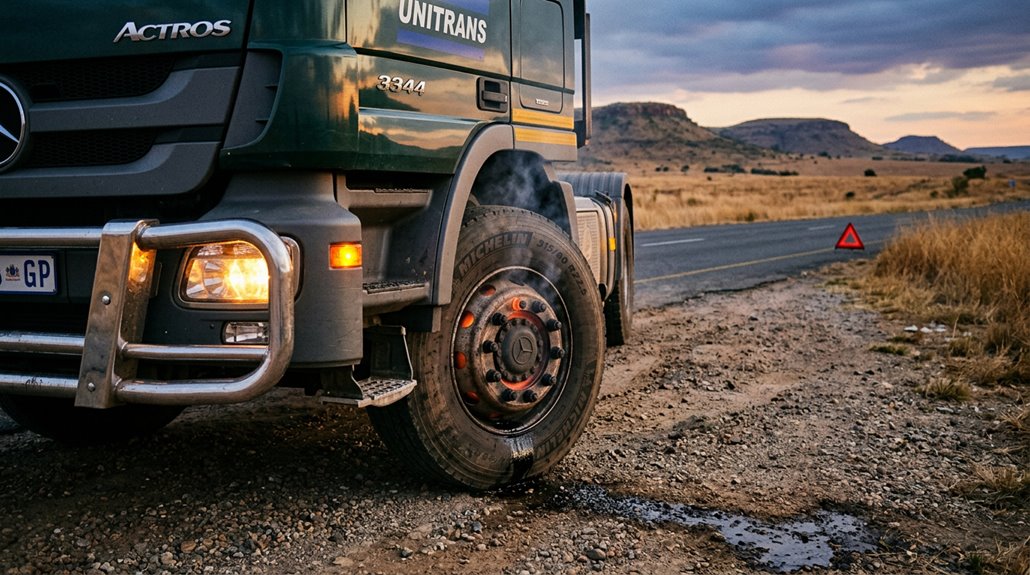
Suspension and steering
Worn bushes, tired shocks and leaking air bags do not just make the ride rough – they eat tyres, crack chassis components and make the truck harder to control. Check air bags for cracks and chafing, look for leaks at fittings, and check that ride height is correct. Our guide to air suspension maintenance for trucks covers it step by step, and Air Lift has a useful basic air-ride maintenance overview.
Electrical system, alternator and batteries
Modern trucks are rolling computers, and they hate low voltage. A weak battery or tired alternator can cause strange warning lights, ECU faults and no-starts. Keep terminals clean and tight, test batteries before winter, and check charging voltage regularly. If the lights dim or the voltmeter drops, read our article on the signs of a weak truck alternator. If batteries keep going flat overnight, see what causes truck battery drain. And for the day it happens anyway, keep our guide to safely jump-starting a truck handy.
Our truck auto electrical service diagnoses wiring and charging faults, and our truck battery service supplies and fits heavy-duty batteries.
Hydraulics
Tippers, cranes, tail-lifts and timber loaders all depend on hydraulics. Check hoses for cracks, bulges and chafing, keep fluid clean and at the right level, and fix leaks immediately – a hydraulic leak is a fire risk, an environmental problem and a sign that a hose is about to burst. Our hydraulic repair service can make up custom hydraulic pipes on site.
Tyres and wheels
Tyres are often the second-largest running cost after fuel, and the most common cause of vehicle-related crashes. Weekly pressure checks, daily visual inspections and quick action on irregular wear pay back faster than almost anything else on this list. Everything you need is in our truck tyre guide for South Africa, including the legal tread depth for trucks.
Chassis, body and cleanliness
A clean truck is easier to inspect – you cannot see a cracked chassis rail or an oil leak under a layer of mud. Regular washing, especially the undercarriage after gravel and forestry roads, also slows corrosion and makes a better impression on clients. Our truck wash service is right here at the workshop.
Warning signs you should never ignore
Some problems can wait for the next service. These should not:
| Warning sign | Possible cause | How urgent? |
|---|---|---|
| Air pressure builds slowly or drops quickly | Air leak, compressor or governor problem, air dryer fault | Stop. Do not drive until fixed. |
| Truck pulls to one side under braking | Brake imbalance, contaminated linings, sticking caliper or adjuster | Urgent. Book in immediately. |
| Red warning light or high engine temperature | Low oil pressure, coolant loss, fan or water pump failure | Stop safely and switch off. |
| Dim lights, battery light or hard starting | Weak alternator, worn belt, failing battery | Soon – before you get stranded. |
| Vibration through the steering wheel | Wheel imbalance, tyre damage, loose wheel nuts, worn steering parts | Urgent – check wheels right away. |
| Grinding or clunking from the driveline | Worn universal joints, centre bearing, diff or gearbox problems | Soon – before it becomes a big repair. |
| Fluid puddles under the truck | Oil, coolant, fuel or hydraulic leak | Identify today; fuel and hydraulic leaks are fire risks. |
Roadworthy tests and the law
In South Africa, heavier trucks carry extra legal responsibilities. According to the South African Government roadworthy guidance, vehicles used for public transport and heavy-load vehicles must be tested for roadworthiness every year before the licence is renewed. Fail to test, and the licence disc cannot be renewed – which takes the truck off the road just as surely as a breakdown.
The best way to pass first time is simply to follow the schedule above. The most common failures – brakes out of adjustment, worn tyres, lights and reflectors, air leaks, steering play and oil leaks – are all things a decent preventive programme catches months earlier. Tyre rules in particular are spelled out in Regulation 212 of the National Road Traffic Regulations.
🥊 Myth vs fact
Myth: “The truck passed its roadworthy, so it is good for the year.”
Fact: A roadworthy certificate shows the truck met the standard on the day of the test. Brakes, tyres and lights wear every day after that. Roadside inspections can still take an unroadworthy truck off the road.
Myth: “New trucks do not need much maintenance.”
Fact: New trucks need their early services more than ever – that is when warranty conditions apply and when early faults show up.
Affordable fleet maintenance: budgeting that actually works
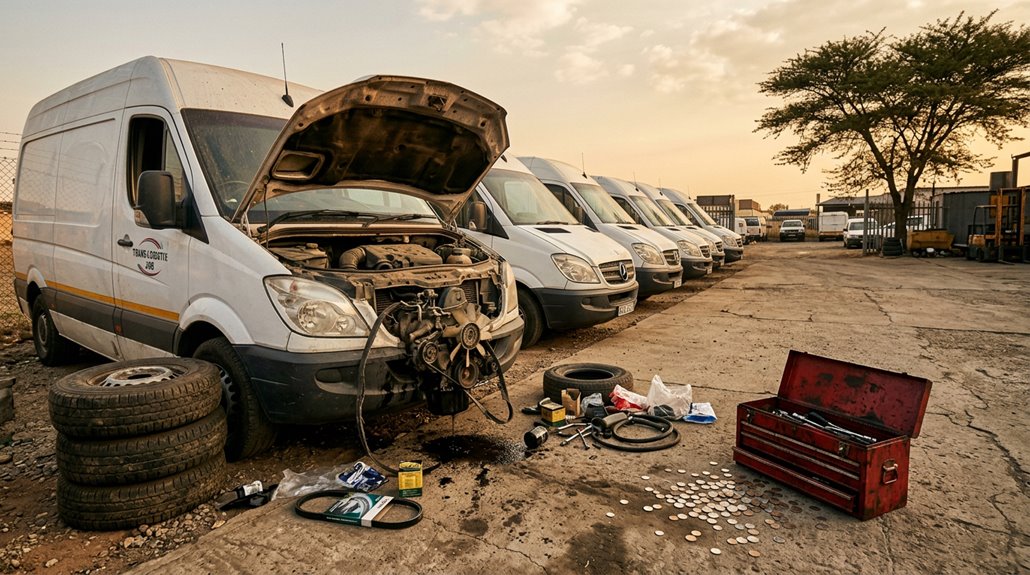
“Affordable” fleet maintenance does not mean cheap parts and skipped services. It means no nasty surprises. The simplest way to get there is to budget per kilometre rather than per month:
- Add up every maintenance, repair and tyre cost for each truck over the past 12 months.
- Divide by the kilometres that truck drove in the same period. That is your maintenance cost per km.
- Multiply by the kilometres you expect next month and set that amount aside.
For example (illustrative figures only), a truck running 12,000 km a month at R1.20 per km in maintenance needs about R14,400 a month put away. Use your own history – your routes and loads will give you different numbers. When one truck’s cost per km climbs well above the rest of the fleet, that is your signal to investigate, or to start planning its replacement.
Our article on how to build a fleet maintenance budget goes into more detail, and the EFM guide to fleet budgeting is another useful South African perspective.
💰 Five quick wins that cut maintenance costs
- Check tyre pressures weekly – it is the cheapest saving in trucking.
- Fix small leaks and defects within 24 hours, before they cause bigger failures.
- Keep a service record per truck – it improves resale value and warranty claims.
- Train drivers on smooth driving; harsh braking and acceleration wear brakes, tyres and driveline.
- Group work so a truck is in the workshop once, not three times a month.
In-house, outsourced or both?
Not every operator needs a full workshop. Here is how the options compare:
| In-house workshop | Outsourced workshop | Hybrid | |
|---|---|---|---|
| Best for | Large fleets with steady work | Small fleets and owner-drivers | Growing fleets |
| Pros | Control, priority, in-depth knowledge of your trucks | No staff or equipment costs, specialist tools and skills on tap | Daily checks in-house, bigger jobs to specialists |
| Cons | High fixed costs, tools, training and parts stock | Less control over scheduling | Needs good coordination and records |
For fleets passing through Mpumalanga, a workshop on your route can work as a “hybrid” partner – handling services, tyres and repairs while the truck is passing through anyway. If you run trucks through the area, see where to find truck maintenance services in Piet Retief.
Your breakdown plan: what every driver should know
Even the best-maintained fleet will have breakdowns. The difference is whether your driver knows exactly what to do. Give every driver a simple plan:
🧾 The “cab card” – print it and keep it in every truck
- Get the truck as far off the road as safely possible, hazards on.
- Put out warning triangles and wear a reflective vest.
- Stay safe – in high-risk areas or at night, stay in the locked cab where possible.
- Share your live location on WhatsApp with the office.
- Call your preferred 24/7 repair or towing number (write it on this card).
- Note the registration, odometer, load and the symptoms before it stopped.
- Photograph the problem if it is safe to do so.
Store a reliable 24-hour number in every driver’s phone before they need it. Our guide on finding 24/7 truck repair services in Mkhondo explains what to look for, and our 24-hour truck towing and recovery service covers the Piet Retief area and the N2.
The human factor: drivers, rest and maintenance
The most important safety component on any truck is the person behind the wheel. A tired driver misses warning signs on the walkaround, brakes harder, and is more likely to make mistakes. Arrive Alive’s guidance on driver fatigue is worth sharing with every driver, and the government has highlighted the value of proper truck stops for driver rest and safety.
Planning maintenance around rest stops kills two birds with one stone. At the Bendet Piet Retief Truck Stop, next door to our workshop, drivers get secure parking with CCTV and guards around the clock, showers, laundry and a canteen while their truck is serviced. Read more in finding the best truck stop in Piet Retief.
🔧 Need truck maintenance in Piet Retief?
Africa Tyres Piet Retief (Bendet) is a 24/7 truck workshop at Plot G14, Welgekozen, on the N2. We handle truck tyres, mechanical repairs, auto electrical, batteries, hydraulics, truck washing and towing – all from one yard. Find out more about us.
Call 084 446 6766 or WhatsApp us – or send us a message.
Frequently asked questions about fleet maintenance
What is fleet maintenance?
Fleet maintenance is the planned servicing, inspection and repair of a group of commercial vehicles to keep them safe, legal and on the road. It combines daily driver checks, preventive services at set intervals, quick repairs of defects and good record-keeping for every vehicle.
How often should a truck be serviced?
Follow the manufacturer’s service intervals first, then shorten them for severe duty such as dusty or gravel roads, heavy loads, lots of idling or steep routes. On top of that, drivers should do a walkaround every day and pressures and fluids should be checked weekly.
How can I make fleet maintenance more affordable?
Budget per kilometre, stick to preventive services, check tyre pressures weekly, fix small defects quickly, train drivers to drive smoothly and group workshop jobs to reduce downtime. Planned maintenance is almost always cheaper than breakdowns.
Do trucks need a roadworthy certificate every year in South Africa?
Yes. According to the South African Government, heavy-load vehicles and vehicles used for public transport must be tested for roadworthiness every year before the vehicle licence is renewed.
What should a driver check before every trip?
Tyres and wheel nuts, lights and indicators, mirrors and windscreen, fluid leaks, air pressure build-up and leaks, warning lights, the coupling and fifth wheel, the load security and that the fire extinguisher and warning triangles are on board.
What is the difference between preventive and predictive maintenance?
Preventive maintenance replaces and services parts at planned intervals. Predictive maintenance uses data such as telematics, oil analysis, fault codes and repair history to spot problems before they cause a failure.
Where can I get truck maintenance in Piet Retief?
Africa Tyres Piet Retief (Bendet) offers 24/7 truck maintenance and repairs at Plot G14, Welgekozen, next to the Bendet Piet Retief Truck Stop on the N2. Call 084 446 6766 for tyres, mechanical, auto electrical, batteries, hydraulics, truck wash and towing.
The bottom line
Great fleet maintenance is not complicated. It is a handful of simple habits done every single day: drivers who look properly, a schedule that is written down and followed, quick action on warning signs, honest records and a plan for when things go wrong. Get those right and your trucks spend more time earning and less time standing.
Start today with two things: print the cab card above for every truck, and read our truck tyre guide – because tyres are where most fleets can save money fastest.