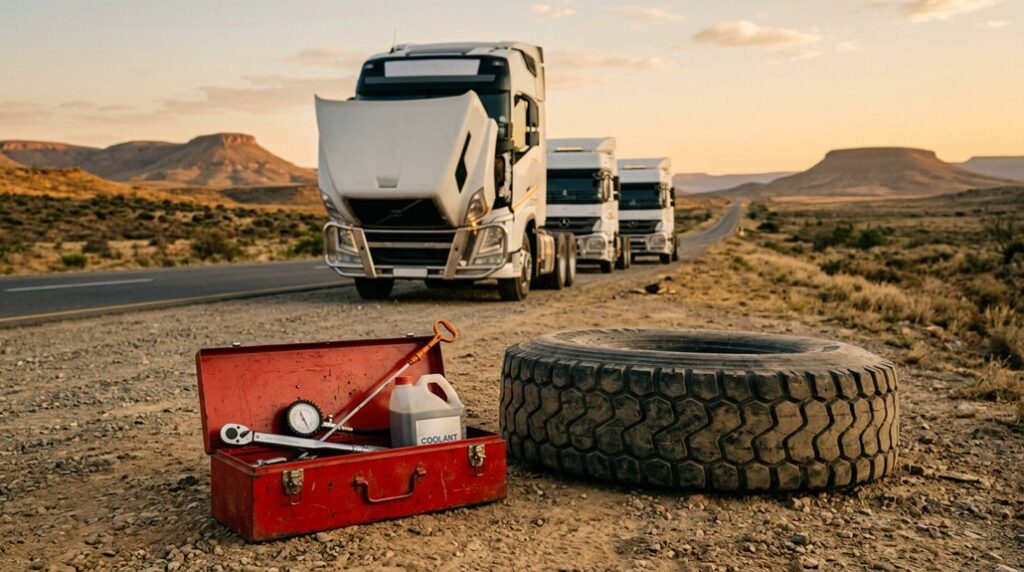
Here is a strange thought for your next coffee stop: everything your truck does – every tonne of timber hauled out of the Mkhondo plantations, every pallet run to Durban, every emergency stop on a misty N2 morning – happens on a handful of rubber patches, each roughly the size of an A4 sheet of paper. That is all that connects 50-odd tonnes of steel, cargo and driver to the road.
So it is no surprise that tyres are one of the biggest running costs in any fleet, and one of the biggest safety risks when they are ignored. This truck tyre guide puts everything in one place: the different tyre positions, how to read a sidewall, how to choose the right tyre, when retreads make sense, what the law says about tread depth, and the daily habits that stretch every rand you spend on rubber. Whether you run one rigid or fifty interlinks, you should finish this page knowing more about tyres than most people in the yard.
⚡ The quick answer
Choose truck tyres by axle position (steer, drive or trailer), application (long-haul, regional or on/off-road), the correct size, load index and speed rating, and the lowest cost per kilometre – not the lowest price. Then protect that investment: check pressures with a gauge when tyres are cold, inspect every tyre daily, keep tread above the 1 mm legal minimum (most experts replace much earlier), and fix alignment and loading problems before they eat your tread.
📋 In this guide
- Why tyres deserve your attention
- Steer, drive and trailer tyres explained
- How to read a truck tyre sidewall
- How to choose truck tyres in 6 questions
- Tyre brands and cost per kilometre
- New vs retreaded tyres
- Tyre pressure: the silent tread killer
- Tread depth and the law in South Africa
- Your daily, weekly and monthly inspection routine
- Reading wear patterns like a detective
- When to replace a truck tyre
- Blowouts: prevention and what to do
- Fitment, balancing, alignment and rotation
- Score your tyre game
- Frequently asked questions
Why truck tyres deserve more of your attention
Fuel is the cost everybody watches. Tyres are the cost that quietly bleeds out in the background. A tyre that runs 15% under-inflated for a few months, a trailer axle that is slightly out of alignment, a casing that gets scrapped because nobody spotted a slow puncture – none of these make headlines in the morning meeting, but together they can add thousands of rands a month to a small fleet. If you are working out where the money goes, our guide on building a realistic fleet maintenance budget shows how tyres fit into the bigger picture.
Then there is safety. According to the Road Traffic Management Corporation figures reported by TopAuto, tyre bursts were behind 54% of crashes where a vehicle factor contributed. In other words, when a vehicle itself is to blame for a crash in South Africa, the tyres are the usual suspect.
The good news? Tyres are also the part of your truck where small, cheap habits make the biggest difference. A pressure gauge costs less than a tank of diesel. A two-minute walkaround costs nothing. Our article on how to maximise truck tyre life goes deeper into the money side, but the rest of this guide gives you the full toolkit.
Steer, drive and trailer tyres: one truck, three very different jobs
The biggest mistake new operators make is treating “a truck tyre” as one product. It is not. A tyre on the steer axle lives a completely different life from a tyre on the drive axle or the back of a tri-axle trailer, and each is designed for that job.
| Position | Main job | Typical tread design | What to watch for |
|---|---|---|---|
| Steer (front axle) | Precise steering, stability and braking – it carries the heaviest single-tyre load | Ribbed, straight grooves for accurate tracking and even wear | Shoulder wear, cuts, uneven wear from alignment problems. This is the tyre you can least afford to lose. |
| Drive (powered axles) | Putting engine torque onto the road and pulling the load, especially on hills and wet roads | Blocks or lugs with deep tread for traction | Heel-and-toe wear, chunking on gravel, mismatched duals |
| Trailer (free-rolling axles) | Carrying the load with low rolling resistance | Ribbed, often shallower tread, designed to resist scrubbing on tight turns | Scrubbing on multi-axle trailers, flat spots from locked brakes, under-inflation |
There are also all-position tyres, which are a sensible compromise for rigid trucks doing a mix of work, and specialist on/off-road tyres with tougher casings and cut-resistant compounds – very handy around Piet Retief, where trucks regularly leave the tar for forestry roads, quarries and farm tracks. For a closer look at each category, see our truck tyre type comparison.
💡 Pro tip from the workshop floor
Never “promote” a worn drive tyre to the steer axle to squeeze out a few more kilometres. Steer tyres need the best tread and the soundest casing on the truck. Work tyres backwards through the truck, not forwards.
How to read a truck tyre sidewall (it is easier than it looks)
That jumble of numbers on the side of a tyre is actually a full CV. Let us decode a very common South African truck size: 315/80 R22.5 156/150L.
- 315 – the section width in millimetres, sidewall to sidewall.
- 80 – the aspect ratio. The sidewall height is 80% of the width.
- R – radial construction (virtually every modern truck tyre).
- 22.5 – the rim diameter in inches. 22.5″ is the standard for heavy trucks and trailers; 17.5″ and 19.5″ are common on medium trucks.
- 156/150 – the load index. The first number is the maximum load for a single-fitted tyre (156 = 4,000 kg), the second for a dual-fitted tyre (150 = 3,350 kg each).
- L – the speed symbol. L means the tyre is rated up to 120 km/h at its rated load.
🤓 Did you know?
Heavy trucks over 9,000 kg GVM are limited to 80 km/h on South African roads, yet their tyres are typically rated for 110–120 km/h. That margin is not an invitation to speed – it is a safety buffer for heat, heavy loads and long climbs like the hills between Piet Retief and Ermelo.
Look for a few other markings too. The DOT date code ends in four digits showing the week and year of manufacture – “2423” means week 24 of 2023. Markings such as “Regroovable” tell you whether the tyre was designed to be regrooved, and a 3PMSF (mountain-snowflake) symbol shows certified severe-weather traction. If you are ever unsure about sizes, the Goodyear tyre size chart is a handy reference.
How to choose truck tyres in 6 questions
Choosing commercial tyres is not about picking the most famous name on the shelf. Answer these six questions honestly and the right tyre almost picks itself. Our detailed guide on how to choose truck tyres for your fleet covers each one in more depth.
- Which axle is it for? Steer, drive and trailer tyres are not interchangeable (see the table above).
- What work does the truck do? Long-haul highway work favours low rolling resistance and even wear. Regional and distribution work needs tyres that handle lots of turning, kerbs and stop-start driving. On/off-road work needs cut and chip resistance above all.
- What load does it really carry? Use the load index for your actual axle weights, not the brochure weight. Overloaded tyres overheat, wear fast and fail.
- What roads and climate? Hot tar, gravel, rain and steep climbs all change the picture. Mpumalanga mist and summer storms make wet grip a big deal on drive axles.
- Will you retread? If yes, buy a quality casing designed for multiple lives. A cheap tyre that cannot be retreaded often costs more in the end.
- What is the cost per kilometre? The price on the quote is only half the story. More on that next.
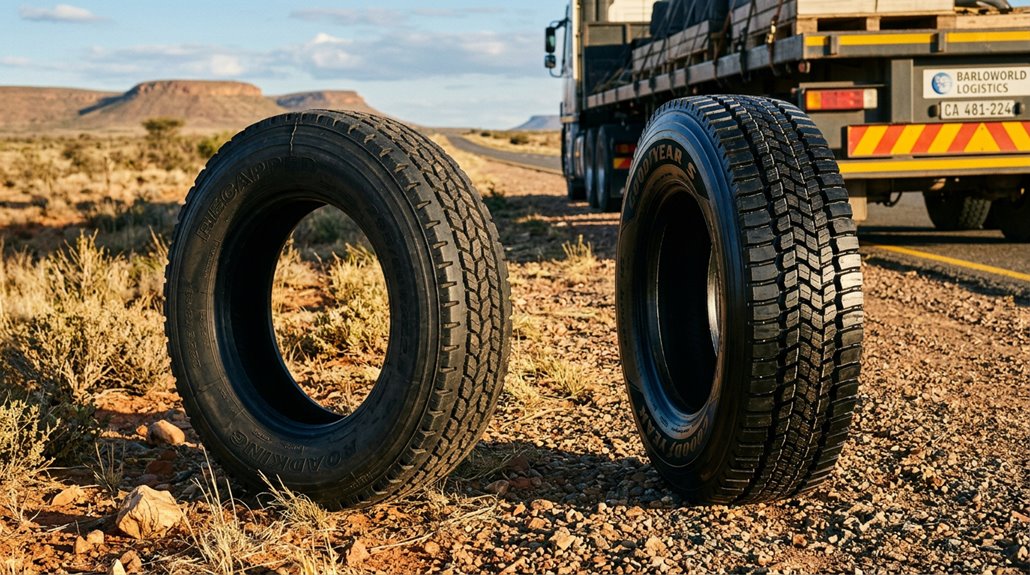
Truck tyre brands and the cost-per-kilometre secret
Broadly, truck tyres fall into three tiers: premium brands with heavy investment in casing technology and retreadability, mid-range brands that offer solid value, and budget imports with the lowest upfront price. Every tier has a place – the trick is matching the tier to the job. Our article on selecting the best truck tyre brand compares the tiers, and Bridgestone South Africa has a useful explanation of how tyre design affects long-haul efficiency.
The fairest way to compare any two tyres is cost per kilometre: what you paid, divided by the kilometres you got from it (including retread lives). Here is a simple example with round, illustrative numbers:
| Tyre A (premium) | Tyre B (budget) | |
|---|---|---|
| Purchase price (example) | R7,500 | R4,800 |
| Kilometres from first life | 150,000 km | 90,000 km |
| Can the casing be retreaded? | Yes – adds roughly another 100,000 km for about R3,000 | Often not |
| Total kilometres | 250,000 km | 90,000 km |
| Cost per kilometre | R0.042 per km (R10,500 ÷ 250,000) | R0.053 per km (R4,800 ÷ 90,000) |
In this example the “expensive” tyre works out roughly 20% cheaper over its life. Your own numbers will differ by route, load and driver, which is exactly why it pays to track the kilometres on every tyre. Keep a simple spreadsheet with the serial number, fitment date, odometer reading and position – after a year you will know exactly which tyres earn their keep.
And what about mixing brands on one truck? It can be done safely if you follow a few rules – same size and construction on an axle, matched duals, and similar tread designs. We explain the do’s and don’ts in can you mix truck tyre brands?, and Continental gives the manufacturer’s view.
New vs retreaded truck tyres: an honest comparison
Retreading gets a bad name from the “gators” – strips of rubber lying on the shoulder of the N2. But most of those are the result of under-inflation, overloading or poor-quality work, not retreading itself. A good retread on a sound casing is a proven, cost-saving choice that fleets around the world rely on, and it keeps thousands of casings out of landfill.
- Where retreads shine: trailer axles and, for many operators, drive axles on regional and long-haul work.
- Where to be careful: most fleets and tyre makers advise keeping retreads off the steer axle, where a failure is most dangerous.
- The golden rule: a retread is only as good as the casing under it. Casings that ran flat, overheated or were badly damaged should not be retreaded.
Bandag explains the trade-offs well in its guide to retreads vs new tyres, and Michelin compares retreads against low-cost imports.
Tyre pressure: the silent tread killer
If you only change one habit after reading this guide, make it this one. Pressure is the single most important factor in tyre life, and it is the one most often ignored. According to Michelin’s truck tyre pressure guidance, running 20% below the correct pressure can cut tyre life by around 20% and push fuel consumption up by about 1.7%.
Under-inflation makes the sidewalls flex more, which builds heat – and heat is what destroys casings and causes blowouts. Over-inflation is not the answer either: it shrinks the footprint, reduces grip, wears the centre of the tread and makes the tyre more vulnerable to impact damage from potholes.
✅ How to check pressure properly
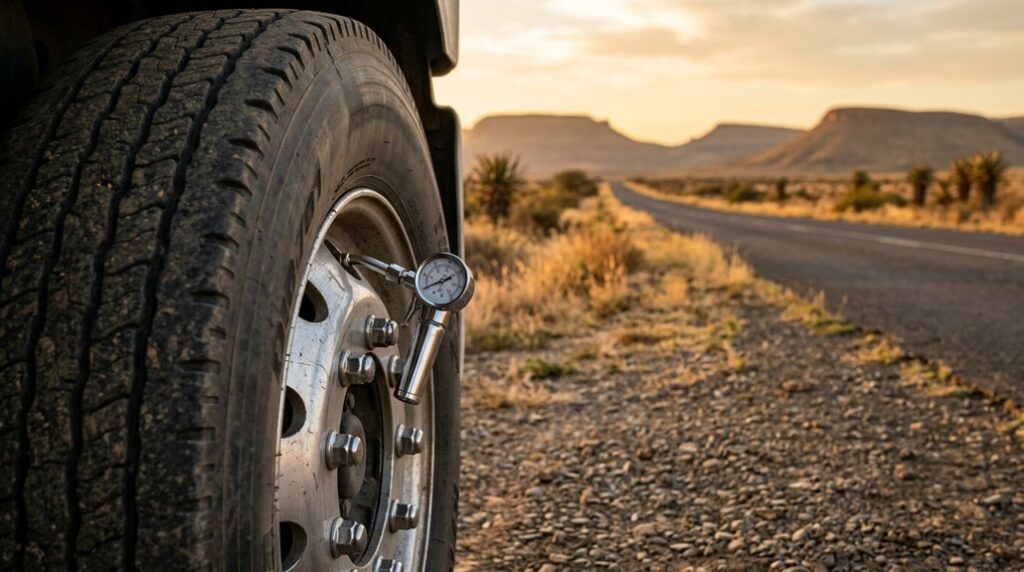
- Check cold – before the first trip of the day, or after the truck has stood for a few hours.
- Use a calibrated gauge. Kicking a tyre tells you nothing, especially with duals.
- Set pressure for the actual axle load using the tyre maker’s load/inflation tables – not one number for the whole truck.
- Never let air out of a hot tyre. Hot pressure is supposed to be higher.
- Check both tyres in a dual pair. A flat inner dual can hide for days while its partner carries double the load.
- Fit valve caps. Dust and grit in a valve core cause slow leaks.
Want to see the fuel side of the argument? This CCJ article on tyre pressure and fuel economy is worth a read.
Tread depth and the law in South Africa
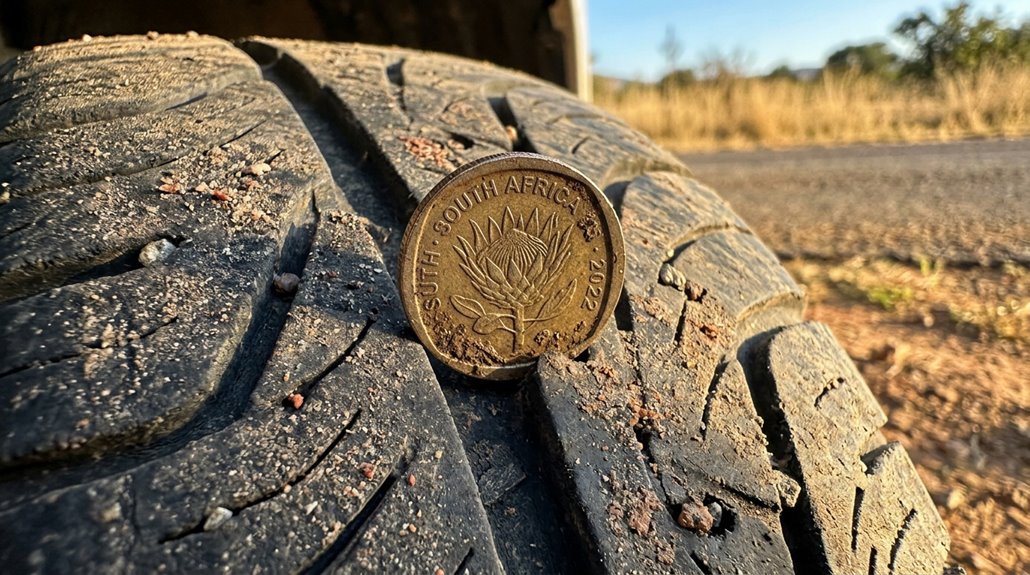
Regulation 212 of the National Road Traffic Regulations is the rule book for tyres on South African roads. You can read the full text on Acts Online. In short: the tread pattern must be at least 1 mm deep across the full breadth and circumference of the tyre, and the regulation also deals with problems like exposed cords, bulges and lumps, and incorrectly regrooved tyres. For a plain-English walk-through, see our article on the legal tread depth for trucks in South Africa.
🥊 Myth vs fact
Myth: “If it is above 1 mm, it is fine.”
Fact: 1 mm is the legal minimum, not a safety target. Wet-weather grip drops sharply as tread wears, and the TopAuto report above notes that Michelin treats 1.6 mm as a safety threshold. Many fleets plan replacement or retreading well before that, especially on steer and drive axles.
Myth: “Regrooving is always illegal.”
Fact: Only tyres designed and marked for regrooving may be regrooved. Cutting new grooves into an ordinary tyre is dangerous and illegal.
The Automobile Association of South Africa also has a good reminder of why tyres should be checked properly and regularly.
Your daily, weekly and monthly tyre inspection routine
Most tyre failures give warnings long before they happen. The trick is to look. Here is a routine that works for owner-drivers and fleets alike. For a printable version, use our truck tyre inspection checklist.
Every day (2–5 minutes, before the first trip)
- Walk around the whole rig and look at every tyre, including the inner duals.
- Look for obvious low tyres, bulges, cuts, exposed cords and objects stuck in the tread.
- Check that valve caps are on and that duals are not touching each other.
- Look for loose or rusty-streaked wheel nuts – rust streaks are a classic sign of a loose wheel.
Every week
- Check all pressures with a gauge, cold.
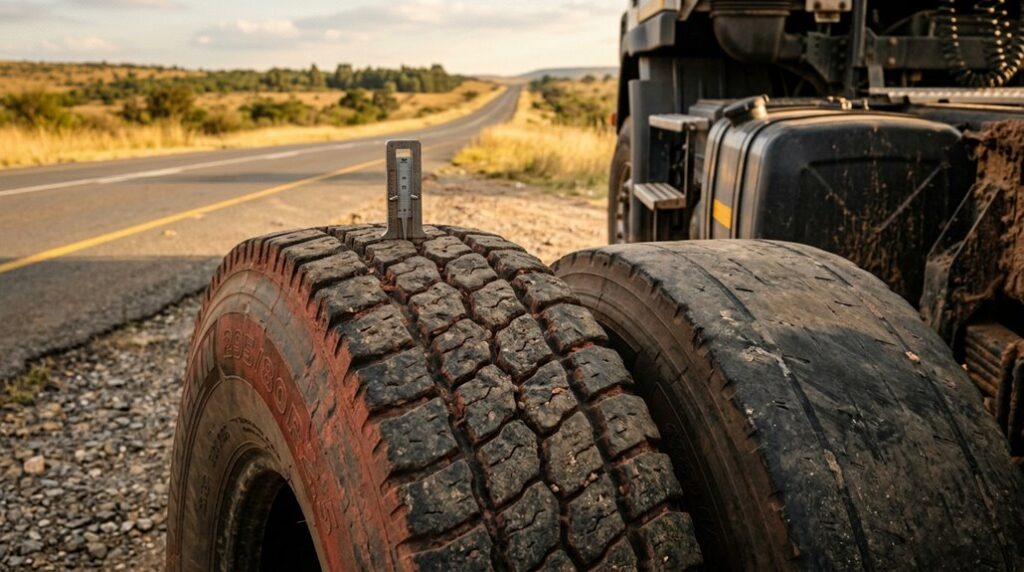
- Measure tread depth at several points across each tyre.
- Check for uneven wear patterns (see the next section).
Every month or service
- Have a tyre professional check alignment, balancing and dual matching.
- Inspect spare tyres too – a flat spare is no spare.
- Update your tyre records with kilometres and tread readings.
Reading wear patterns like a detective
A worn tyre is a witness. Read its tread and it will tell you what is wrong with the truck long before a mechanic does. Michelin’s guide to irregular tyre wear has excellent photos, but here are the patterns we see most often:
| Wear pattern | Likely cause | What to do |
|---|---|---|
| Both shoulders worn, centre fine | Under-inflation or overloading | Correct pressures for the real load, check axle weights |
| Centre worn, shoulders fine | Over-inflation | Reduce to the correct pressure for the load |
| One shoulder worn | Wheel alignment (toe or camber) problems | Book an alignment, check for bent components |
| Feathered edges across the tread | Toe misalignment | Alignment check on that axle |
| Cupping or scalloping | Worn shocks, bearings or unbalanced wheels | Check suspension parts and balance the wheel |
| Flat spots | Brakes locking, or heavy braking with brakes out of adjustment | Check brakes and ABS before fitting new tyres |
| One dual worn more than the other | Mismatched diameters or unequal pressures | Match duals and check pressures in both |
Notice how many of those causes are not tyre problems at all? Suspension, brakes and alignment all show up in the tread first. That is why tyre care is really part of overall truck maintenance – our complete fleet maintenance guide shows how it all connects, and our article on air suspension maintenance covers one of the most common hidden culprits.
When to replace a truck tyre
Replace (or retread, if the casing is sound) when any of these show up:
- Tread approaching the legal minimum – or your own fleet limit, which should be higher.
- Cuts deep enough to reach the cords, or any exposed cords.
- Bulges, blisters or separations on the sidewall or tread.
- Repeated pressure loss that a repair cannot fix.
- Damage from running flat or under-inflated.
- Old age – cracked, weathered rubber, even with tread left.
We go through each sign with examples in the warning signs that your truck tyres need replacing. Continental also has a helpful overview of common tyre damage.
Blowouts: how to prevent them and what to do if one happens
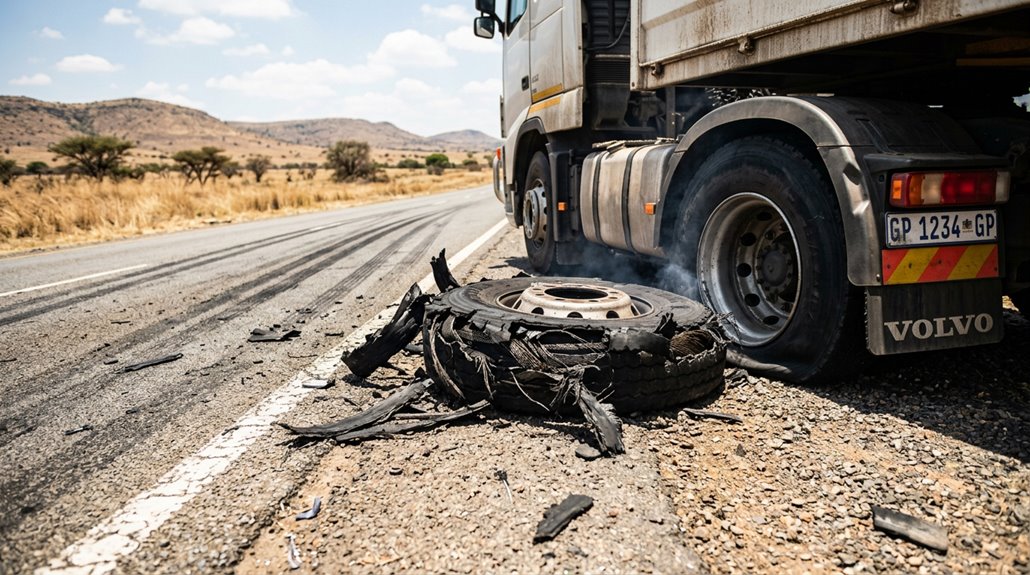
Most blowouts come down to heat, and most heat comes down to low pressure, overloading or a damaged casing. Get those three under control and you remove the biggest risks. But if a tyre does let go at speed, the instinct to brake hard is exactly the wrong one.
🚨 If a tyre bursts while you are driving
- Hold the steering wheel firmly with both hands and keep the truck straight.
- Do not slam on the brakes. Ease off the accelerator gently – some drivers apply a little throttle for a moment to keep the truck stable.
- Let the truck slow down by itself, then brake gently once you are under control.
- Pull off well away from traffic, switch on your hazards and put out your warning triangles.
- Call for help rather than changing a heavy truck tyre on a busy shoulder.
The Arrive Alive blowout guidance backs this up, and our own article on preventing and handling truck tyre blowouts has more detail.
Fitment, balancing, alignment and rotation
Even the best tyre will disappoint if it is fitted badly. A few things a good tyre workshop should always do:
- Inspect the rim for cracks, rust and damage before fitting.
- Inflate in a safety cage. A truck tyre holds enormous energy; a rim or tyre failure during inflation can be deadly.
- Balance the wheel, especially on the steer axle where vibration is felt through the steering.
- Match duals so both tyres in a pair are close in diameter and tread depth.
- Torque wheel nuts correctly with a calibrated torque wrench – and re-check them after the first 50–100 km.
- Check alignment whenever you see irregular wear or fit new steer tyres.
Rotation also helps even out wear on some fleets – the Tire Industry Association publishes training and best practice on this. At our Piet Retief workshop, our truck tyre fitment, balancing and puncture repair service handles all of the above, 24 hours a day.
🛞 Tyre trouble near Piet Retief?
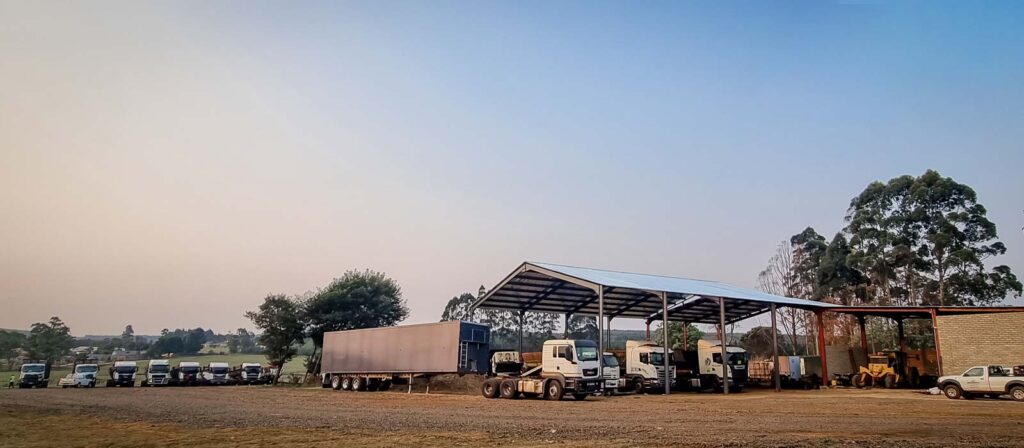
Africa Tyres Piet Retief (Bendet) runs a 24/7 truck tyre and repair workshop at Plot G14, Welgekozen, right next to the Bendet Piet Retief Truck Stop on the N2. We can fit, balance and repair truck tyres, and if you are stuck on the road our 24-hour truck towing and recovery team can come to you. While we work, your driver can shower, eat and rest at the truck stop.
Call 084 446 6766 or WhatsApp us – or send us a message.
Score your tyre game (be honest!)
Give yourself one point for every statement that is true for your truck or fleet:
- Every driver does a tyre walkaround before the first trip.
- Pressures are checked weekly with a gauge, cold.
- Pressures are set for the actual axle load.
- We know the cost per kilometre of our main tyres.
- We record the serial number and fitment kilometres of every tyre.
- Our replacement limit is above the 1 mm legal minimum.
- Duals are matched when fitted.
- Wheel nuts are re-torqued after fitment.
- Irregular wear triggers an alignment or suspension check.
- Our spare tyres are inflated and in good condition.
8–10: Tyre champion. Your tyres (and your accountant) thank you.
5–7: Solid, but there is money left on the road – pick two items to fix this month.
0–4: Your tyres are costing you more than they should. Start with pressures and daily checks – they are free and they pay back fast.
Frequently asked questions about truck tyres
How long do truck tyres last in South Africa?
There is no single number. Steer tyres on long-haul work can run well over 100,000 km, while drive tyres on tough regional or on/off-road work wear much faster. Pressure, load, alignment, route and driving style make the biggest difference, which is why tracking cost per kilometre is so useful.
What is the legal minimum tread depth for trucks in South Africa?
Regulation 212 of the National Road Traffic Regulations requires a tread depth of at least 1 mm across the full breadth and circumference of the tyre. Most fleets replace or retread well before this for safety, especially on steer and drive axles.
Can I use retreaded tyres on my truck?
Yes. Quality retreads on sound casings are widely used on trailer and drive axles and can lower your cost per kilometre considerably. Most fleets and tyre makers advise against retreads on the steer axle.
How often should I check truck tyre pressure?
Do a visual check every day and measure pressures with a calibrated gauge at least once a week, when the tyres are cold. Set pressures according to the actual axle load using the tyre manufacturer’s load and inflation tables.
What do the numbers on a truck tyre mean?
In a size like 315/80 R22.5 156/150L, 315 is the width in mm, 80 is the aspect ratio, R means radial, 22.5 is the rim size in inches, 156/150 are the load indexes for single and dual fitment, and L is the speed rating (120 km/h).
Can I mix different tyre brands on my truck?
It can be done safely if tyres on the same axle have the same size and construction, duals are matched in diameter, and tread designs are similar. Avoid mixing very different tyres on the steer axle.
Where can I get truck tyres fitted 24/7 near Piet Retief?
Africa Tyres Piet Retief (Bendet) is open 24/7 at Plot G14, Welgekozen, next to the Bendet Piet Retief Truck Stop on the N2. Call 084 446 6766 for truck tyre fitment, balancing, puncture repairs and roadside help.
The bottom line
Truck tyres are not glamorous, but they are where safety, uptime and profit meet the road – literally. Choose them by position, application and cost per kilometre. Look after them with correct pressures, daily checks and good fitment. And treat strange wear as a message from the truck, not just a tyre problem. Do that, and every tyre on your rig will work harder for longer.
Want to go further? Start with our daily tyre inspection checklist, then read our truck and fleet maintenance guide to keep the rest of the truck in the same great shape.