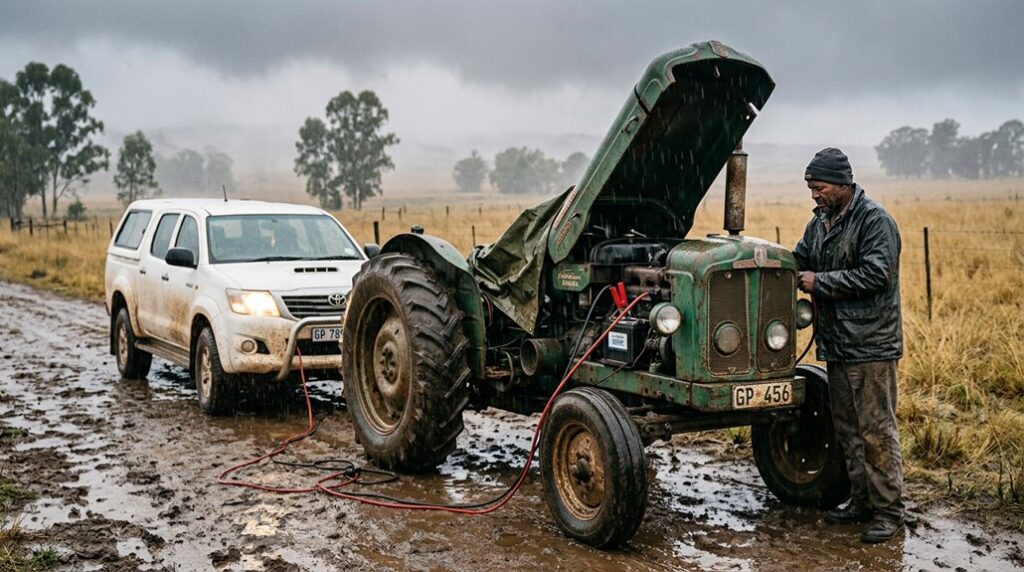
Your diesel tractor’s battery dies on the wettest morning of the year, right when the field can’t wait. Rain makes it worse than an inconvenience. It can bridge exposed terminals, trigger shorts, and drain a battery’s output just when your engine demands 600 or more cold cranking amps. Most people assume a downpour rules out a jump-start. It doesn’t. With the right gear, a quick battery check, and one connection step almost everyone gets backwards, you can get that engine turning without risking a spark, a fried alternator, or a nasty jolt. Before you touch a single clamp, here’s what has to happen first.
Know What Rain Changes When Jump-starting a Diesel Tractor
When rain hits during a breakdown, jump-starting a diesel tractor stops being a routine task. Moisture changes the electrical risk, the battery’s behaviour, and how your cables perform. Tractor batteries rated from 400 to 1000+ cold-cranking amps can deliver massive current, so a single short across wet terminals can cause burns, fires, or component damage. Experienced operators know this, and you’re part of that group.
Here’s what rain changes:
- Water can bridge exposed terminals, clamps, or damaged cable insulation.
- Wet, corroded posts transmit stray current more easily than clean ones.
- Cold rain reduces battery output, and a diesel engine needs more starting power than petrol engines.
- Moisture hides cracks, leaks, swollen cases, and loose connections.
- Poor visibility raises the chance of reversed connections.
“Rain doesn’t kill a battery. It exposes one that was already failing.”
Before you jump-start diesel tractor batteries, dry the posts. That’s the foundation of safe jump-starting.
Wear Eye Protection and Keep Dry Footing at the Tractor
Drying the posts protects the battery, but your own body needs the same attention. Put on eye protection before you enter the work area, not after you’ve connected the cables. Sparks, splashes, and flying particles can injure your eyes. The American Academy of Ophthalmology estimates that 90% of eye injuries are preventable with proper eyewear. Choose ANSI Z87.1-marked eyewear with side protection. It should fit well over prescription glasses.
| Gear | Why You Need It |
|---|---|
| Safety goggles | Seal out splashes and fragments |
| Waterproof boots | Keep feet dry in rain |
| Slip-resistant soles | Grip mud and wet concrete |
Dry footing keeps you stable while you reach across battery terminals. Steel-toed boots with a steel shank add puncture protection. Replace cracked eyewear and worn boots promptly.
Careful crews share one rule: “When in doubt, treat it as hazardous.” You belong to that trusted, safety-first farm team.
Rule Out a Damaged Battery Before Any Tractor Jump-start
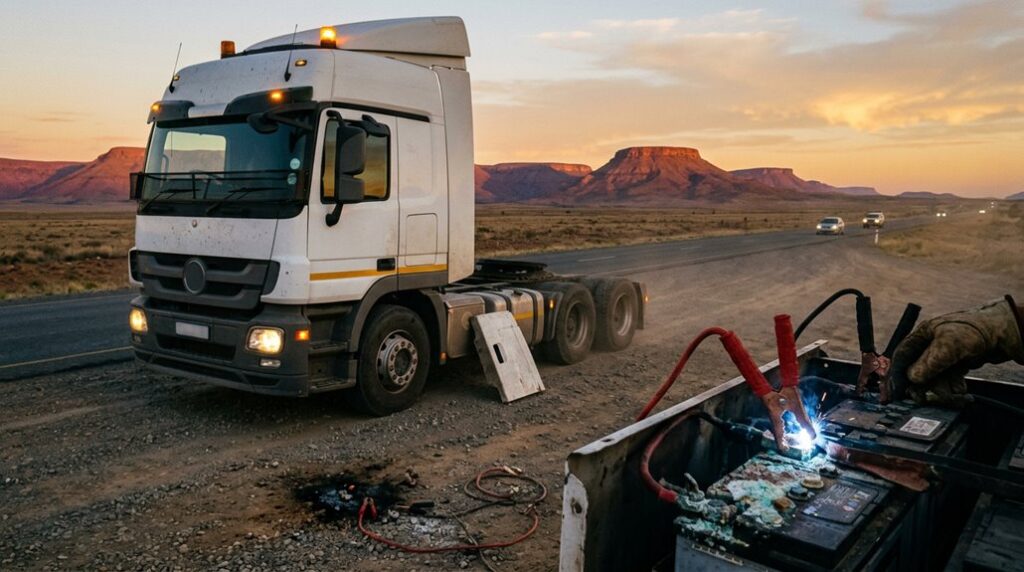
Before you clamp a single cable, inspect the battery itself. A damaged battery turns a jump-start in rain into a serious hazard. Experienced drivers across the N2 freight community make this check their first step.
Inspect the battery before clamping any cable. A damaged battery turns a rainy jump-start into a serious hazard.
Look for these warning signs:
- Cracks in the case, which signal structural failure
- Swelling or bulging from internal pressure or overheating
- Leaking fluid, wet spots, or pooled acid
- White or bluish corrosion around terminals or vents
- Smoke, odd noises, odours, or excess heat
If you see any of these, don’t jump-start. Treat the battery as defective. “Replace a damaged battery with a charged unit first” is the standard rule. For safe repairs and on-site testing, many local drivers rely on expert auto electrical services that use proper diagnostic tools and quality components.
Frequent jump-starts also matter. Batteries below about 80% capacity usually need replacement.
Call an auto electrician when you’re unsure.
Jump-start Your Diesel Tractor in the Rain Step by Step
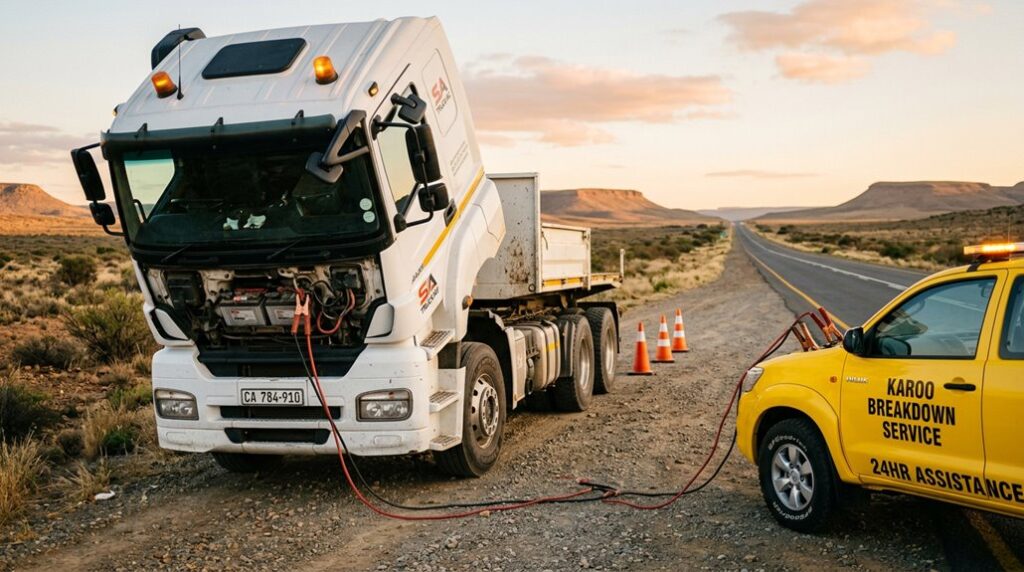
Once you’ve confirmed the battery is sound, prepare the tractor for a safe restart. Shift out of gear, apply the parking brake, and remove the key. Turn off accessories on both machines to limit battery drain.
Follow the sequence trusted operators use:
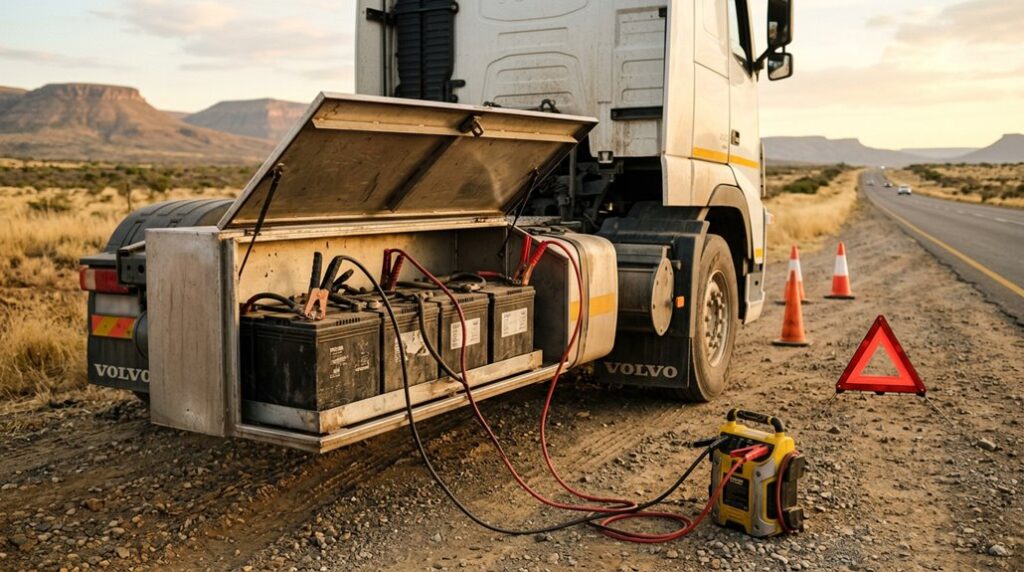
- Connect positive to the donor battery, then to the dead battery.
- Connect negative to the donor, then to a clean engine block or chassis earth.
- Keep clamps dry and clear of moving parts.
- Insert the key only after cables are secure.
Start the donor and let it charge briefly. Jump-start the tractor from the operator’s seat only. Never bypass-start it, since an in-gear tractor can run you over.
If it cranks without firing, stop and reassess. Stable idle is a great result.